

Hytrin
Stefan C. Bertog, MD
- Interventional Cardiology Veterans Administration Medical Center,
- University of Minnesota, Minneapolis, MN, USA
Hytrin dosages: 5 mg, 2 mg, 1 mg
Hytrin packs: 30 pills, 60 pills, 90 pills, 120 pills, 180 pills, 270 pills, 360 pills
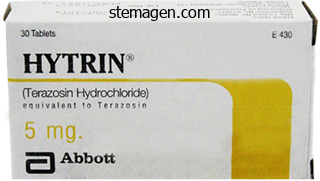
Cheap 5mg hytrin fast delivery
Individuals who carry two normal or one regular and one decreased function allele are classified as "normal metabolizers blood pressure medication dosages generic 1 mg hytrin with visa. As an opioid analgesic connexin 43 arrhythmia cheap hytrin 5 mg free shipping, codeine is used to relieve gentle to reasonably extreme ache hypertension specialist doctor 5mg hytrin sale. Its analgesic properties depend on its conversion to morphine that binds to the mu opioid receptor with 200-fold larger affinity than codeine. About 80% of an administered dose of codeine is transformed to inactive metabolites and excreted. Individuals who carry at least one copy of a normal-function allele or two partially functioning alleles, so-called regular metabolizers, are more than likely to have a traditional response to codeine. As a outcome, even with regular doses of codeine, these individuals may experience the symptoms of morphine overdose, which embrace excessive sleepiness, confusion, shallow respiration, and respiratory despair. The ultrarapid metabolizer has been estimated to be current in 1%�2% of patients, however the prevalence varies widely in numerous populations. It is estimated to be present in up to 28% of North Africans, Ethiopians, and Arabs; 10% in Caucasians; 3% in African Americans, and 1% in Hispanics, Chinese, and Japanese. Individuals who carry both two decreasedfunction alleles or one decreased-function and one no-function allele (intermediate metabolizers) may not reply as well to codeine because the metabolism of codeine to morphine is decreased. This allele is mostly found in Asian subpopulations, notably in people of Korean, Han Chinese, or Thai descent. Risperidone is essentially the most commonly prescribed antipsychotic medicine within the United States. It is an atypical (second-generation) antipsychotic used in the therapy of schizophrenia, bipolar disorder, extreme dementia, and irritability related to autism. Individuals with one regular and one no-function allele or two decreased-function alleles are also categorized as "normal metabolizers" by latest nomenclature pointers, however have also been categorized as "intermediate metabolizers" elsewhere in the literature. Individuals with one decreased and one no-function allele are predicted to be "intermediate metabolizers. Carbamazepine (brand names include Carbatrol, Epitol, Equetro, and Tegretol) is an effective antiseizure drug. Glucuronidation and betaoxidation within the mitochondria (liver) are considered main routes, accounting for 50% and 40% of the dose, respectively. It is metabolized predominantly by glucuronic acid conjugation; the main metabolite is an inactive 2-N-glucuronide conjugate. Therefore, using an alternative drug would most likely be thought-about for better patient remedy on this case. Individuals homozygous for 2 alleles with low or poor exercise are poor metabolizers. A variant in exon 5 that ends in an aberrant splice web site; this results in the manufacturing of a truncated and nonfunctioning protein. Seven months after the start of therapy, he offered with pneumonia and was admitted again. Irinotecan (brand name, Camptosar) is a topoisomerase I inhibitor broadly used within the therapy of most cancers. However, irinotecan remedy is related to a high incidence of toxicity, including severe neutropenia and diarrhea. The presence of this variant results in reduced excretion of irinotecan metabolites, which leads to elevated active irinotecan metabolites within the blood. If the affected person tolerates this preliminary dose, the dose could be elevated guided by the neutrophil rely. Therefore, lowering the irinotecan dose would more than likely be considered for better affected person administration in this case. Despite the danger of everlasting ototoxic effects, aminoglycosides stay as generally utilized antibiotics worldwide owing to their low cost and effectivity in treating severe infections. Over the previous twenty years, mitochondrial variants have been proven to improve the chance of ototoxic injury. Azathioprine is an immunosuppressant medicine that belongs to the class of thiopurines. In addition, offlabel it additionally has been used to deal with inflammatory bowel illness, such as ulcerative colitis. The side effect of azathioprine is bone marrow suppression, which may be dose-dependent, and may be reversed by decreasing the dose. Thiopurines are used as anticancer agents and as immunosuppressants in inflammatory bowel disease, rheumatoid arthritis, and other autoimmune circumstances. Three thiopurines are used clinically-thioguanine, mercaptopurine, and azathioprine (a prodrug for mercaptopurine). The three agents have related results however are usually used for different indications. One of probably the most frequent antagonistic reactions to azathioprine is myelosuppression, which can occur in any affected person, and might normally be reversed by decreasing the dose of azathioprine. Therefore, on this case, using an alternate drug would be a conservative approach to reduce the risk of antagonistic effects related to azathioprine in this affected person. Simvastatin is among the mostly used prescription medications for ldl cholesterol reduction. It impacts the pharmacokinetics of simvastatin and, to a lesser degree, the pharmacokinetics of different statins. In these circumstances, we recommend a lower dose of simvastatin or use an alternate statin. A pharmacodynamic comparability of a personalized strategy for anti-platelet therapy versus ticagrelor in reaching a therapeutic window. Codeine-associated pediatric deaths regardless of utilizing recommended dosing tips: three case stories. Pharmacogenetics of morphine poisoning in a breastfed neonate of a codeine-prescribed mom. Pharmacogenetics of antipsychotic antagonistic results: case studies and a literature evaluation for clinicians. Gentamicin induced ototoxicity throughout therapy of enterococcal endocarditis: decision with substitution by netilmicin. From a fish tank injury to hospital haemodialysis: the intense consequences of drug interactions. Genetic counselors are an integral a part of scientific care in many areas of medicine, corresponding to assisted reproductive technology/infertility genetics, most cancers genetics, cardiovascular genetics, cystic fibrosis genetics, fetal intervention and remedy genetics, hematology genetics, metabolic genetics, neurogenetics, pediatric genetics, personalized medicine genetics, prenatal genetics, and postmortem genetic testing. When sufferers see a genetic counselor, the counselor normally takes the family well being history; may arrange appointments to have tests to check for genetic circumstances; helps sufferers understand test outcomes and recurrent risks; and refers patients to medical specialists, education resources, and assist teams for the households. A support group is a gaggle of individuals who have the identical kind of considerations who meet to try to assist each other.
Cheap hytrin 1 mg on-line
Beta thalassemia (thalassemia) is characterized by lowered synthesis of the hemoglobin subunit beta resulting in microcytic hypochromic anemia blood pressure in children hytrin 2 mg online. Therefore arrhythmia upon waking hytrin 2mg otc, it will be most probably that HbF increased considerably in this patient arrhythmia bigeminy generic hytrin 2mg online. Bayesian analysis for the provider probability of both dad and mom being carriers is 1/81 (see the desk below). The most typical type of alpha thalassemia seen in the United States is due to the 3. Therefore, deletion is most typical in patients with alpha thalassemia in comparison with different kinds of variants. Glu6Val residue and the complementary regions on adjacent molecules may find yourself in the formation of extremely ordered insoluble molecular polymers that mixture and deform the form of the purple blood cells, making them brittle and poorly deformable, increasing adherence to the endothelium. Therefore, one of four copies of alpha-globin chains was deleted in the wife, since she was an -3. Therefore, certainly one of four copies of alpha globin chains had been deleted in the spouse, since she was an -4. All 4 alleles are deleted or dysfunctional (inactivated) in patients with Hb Barts hydrops fetalis syndrome. Hemoglobin H (HbH) illness is a result of deletion or dysfunction of three of 4 -globin alleles. And one of four copies of alpha-globin chains was deleted in the husband, since he was an -4. Molecular genetic testing of HbA1 and HbA2 detects deletions in about 90% and level mutations in about 10% of affected individuals. All 4 alleles are deleted or dysfunctional (inactivated) in sufferers with hemoglobin Bart hydrops fetalis syndrome. Hemoglobin H (HbH) disease is a results of deletion or dysfunction of three of 4 alphaglobin alleles. And one out of four copies of alpha-globin chains was deleted within the husband since he was an -4. During meiosis, misalignment of chromosome homologs adopted by reciprocal recombination at X, Y, or Z leads to deletion or duplication occasions, such as the loss of a single -globin gene on one chromosome and the triplication of -globin genes on the other chromosome. Beta thalassemia (thalassemia) is characterised by decreased synthesis of the hemoglobin subunit beta (hemoglobin beta chain) that leads to microcytic hypochromic anemia, an abnormal peripheral-blood smear with nucleated red blood cells, and reduced quantities of hemoglobin A (HbA) on hemoglobin analysis. Individuals with beta thalassemia major have extreme anemia and hepatosplenomegaly. Therefore, single nucleotide mutation is most typical in patients with beta thalassemia compared with other forms of variants. In fetuses and infants, the hemoglobin is made up of two alpha chains and two gamma chains (HbF: 2 2). As the infant grows, the gamma chains are progressively changed by beta chains, forming the adult hemoglobin HbA (22). Therefore, / is associated with a more significant HbF increase than within the others. Normally, the majority of grownup hemoglobin (HbA) consists of two -globin and two -globin chains arranged into a heterotetramer. In thalassemia, patients have defects in both the - or -globin chain, inflicting manufacturing of irregular red blood cells. In thalassemias, production of the -globin chain is affected, whereas in thalassemia, production of the -globin chain is affected. In newborns with thalassemia Hb Barts syndrome, all 4 -globin alleles are deleted or inactivated in Hb Barts syndrome. Mutations are characterised as or thalassemia main if they prevent any formation of chains. Therefore, Hb Barts has the earliest onset and the worst prognosis amongst all of the hemoglobinopathies listed. The worldwide distribution of inherited alpha thalassemia corresponds to areas of malaria publicity. Alpha thalassemia is frequent in sub-Saharan Africa, the Mediterranean Basin, the Middle East, South Asia, and Southeast Asia, and totally different genetic subtypes have variable frequencies in every of these areas. The epidemiology of alpha thalassemia in the United States displays this global distribution pattern. Deletions are the commonest sort of variants for alpha thalassemia, whereas single-nucleotide mutations are more common in patients with beta thalassemia. The commonest form of alpha1 thalassemia seen in the United States is due to the -3. It is the commonest nondeletion in the genes for alpha globin and alpha thalassemia. Facial options are distinctive; talipes equinovarus (club foot) is widespread, as are hypospadias and cryptorchidism in males. The deletion may be de novo or inherited from a mother or father who carries a balanced chromosome rearrangement. Alpha-thalassemia trait results from deletion or inactivation of two -globin alleles (-/ in cis configuration or -/- in trans configuration) (2/4). Once an at-risk child is understood to be unaffected, the danger of his/ her having both thalassemia or 1 thalassemia is 2/3. All 4 -globin alleles are deleted or inactivated in Hb Barts syndrome because of deletion or inactivation of all 4 -globin alleles (4/4). If an at-risk youngster is thought to be unaffected, he/her has 2/3 risk to have both or 1 thalassemia is 2/3. Therefore this baby would most likely have an increased probability of getting Hb Barts by 2 years of age. Hemoglobin H (HbH) disease results from deletion or inactivation of three -globin alleles, usually because of a compound heterozygous state for thalassemia and 1 thalassemia (3/4). HbH illness outcomes from deletion or inactivation of three -globin alleles, often because of a compound heterozygous state for thalassemia and 1 thalassemia (3/4). If a fetus has 4 dysfunctional (inactivated) -globin chains, he/ she has Hb Barts hydrops fetalis syndrome, which is essentially the most extreme scientific form of thalassemia. Red cells with Hb Barts have a particularly high oxygen affinity and are incapable of efficient tissue oxygen supply. The scientific options are extreme anemia, marked hepatosplenomegaly, diffuse edema, coronary heart failure, and extramedullary erythropoiesis. Alpha thalassemia trait (thalassemia) outcomes from deletion or inactivation of two -globin alleles (-/ in cis configuration or -/- in trans configuration) (2/4 allele). HbH illness results from deletion or inactivation of three -globin alleles, normally as a outcome of a compound heterozygous state for thalassemia and thalassemia (3/4 alleles). Patients with HbH illness (chronic microcytic, hypochromic hemolytic anemia of variable severity) normally are symptomatic. Fetal hemoglobin (22), composed of two alpha and two gamma subunits, is the first hemoglobin current during fetal development. Around the time of delivery, gamma expression is diminished as -globin expression is increased. Individuals with alpha thalassemia have deletions/mutations that impair -globin manufacturing.
Syndromes
- Numbness
- Include adequate fiber in your diet. Fiber is found in green leafy vegetables, fruit, beans, bran flakes, nuts, root vegetables, and whole-grain foods.
- Laxative
- Depression
- Gallstones (cholelithiasis)
- Hammer toe
- Surgery to remove burned skin (skin debridement)
- Age-appropriate diet for children
- Plasma exchange (plasmapheresis)
- ECG (electrocardiogram)
Generic hytrin 1 mg on line
I f doubtful blood pressure medication and adderall buy discount hytrin 2 mg line, an arterial blood fuel analysis must be carried out to confirm sufficient lung ventilation prehypertension nhs discount 5 mg hytrin mastercard. Recovery from anaesthesia nearly all of patients are allowed to wake up as traditional on the end of operation blood pressure chart uk nhs generic 5mg hytrin with visa, preferably in a dedicated neurosurgical restoration room. T Patients ought to return rapidly to at least their preoperative level of consciousness. S eizures after elective intracranial neurosurgery are surprisingly rare; in the event that they occur, they should be handled instantly and the cause recognized. However, they may be tough to detect and are a one cause of depressed consciousness after the top of surgery. Complete reversal of neuromuscular blockade must be achieved; judicious use of intraoperative opioids ought to take away the necessity for administration of naloxone. Historically, long-acting opioids have been used very cautiously after craniotomy or upper cervical spine surgery. However, reasonable to severe ache is widespread, and most patients could be given an opioid intravenously or orally in addition to paracetamol. Anaesthesia for intracranial surgery Anaesthesia for intracranial surgical procedure the preoperative condition of patients who present for craniotomy varies enormously. Unlike gliomas, the amount effect of a meningioma is usually minimal because a reduction within the quantity of the opposite intracranial contents compensates. S ome sufferers could also be frankly dehydrated, and although it is important to keep away from aggressive preoperative fluid therapy, hypovolaemia must be treated earlier than induction of anaesthesia. For slowly rising tumours similar to meningiomas and less aggressive gliomas, as near a complete excision as attainable is a empted. However, whole excision of all the macroscopically identifiable glioma tissue is now thought-about futile for fast-growing lesions. Large portions of tumours are excised if pressure symptoms are the primary presenting function. I f lesions are small, deep-seated or near crucial areas (such because the motor strip or speech centre) a radiologically guided biopsy or awake surgical procedure is suitable. Frameless image-guided surgical procedure is now the tactic of alternative for biopsy and tumour excision. A scan of the mind (and skull) is compared with topographical options of the pinnacle in theatre to guide a biopsy needle or small craniotomy biopsy and excision. The head is often stored in a relentless place relative to the registration utilizing three-pin fixation. Registration of the picture steerage system can take a while, and the anaesthetist must be alert to the problems of the anaesthetised but unstimulated patient. Trigonometry is then used to find coordinates relative to the body which describe the exact website of the lesion (to inside 1mm). A fter surgical procedure, sufferers should be assessed for neurological defects associated to the excised tissue. There is a danger of postoperative haemorrhage after any craniotomy, and a deterioration in acutely aware state should be investigated urgently. Pituitary surgery (hypophysectomy) the pituitary fossa is mostly approached via the nostril and sphenoid sinus (trans-sphenoidal). Less commonly it requires a frontotemporal craniotomy for big suprasellar tumours. The majority of pituitary adenomas are non-functioning and cause pressure signs, often on the optic chiasm resulting in a bitemporal hemianopia. A cromegalic patients who current for pituitary surgical procedure may pose difficulties in tracheal intubation and are susceptible to obstructive sleep apnoea. Glucocorticoid substitute is required within the quick perioperative interval; mineralocorticoid necessities improve solely slowly over the next days. D iabetes insipidus may present within the immediate postoperative interval and requires stabilisation with vasopressin until the degree of the imbalance is thought. O lder sufferers could require a everlasting shunt after intracranial haemorrhage or head injury or to treat regular pressure hydrocephalus. These procedures vary from elective to emergency (the latter for acute hydrocephalus). Compensatory systemic hypertension to keep cerebral perfusion may be current. A dequate venous access is necessary to enable rapid resuscitation in response to this severe however temporary hypotension. S hunt surgery may be painful, particularly at the website of insertion into the peritoneum or from the tunnelling of the catheter under the pores and skin. Use of long-acting opioids has to be balanced towards the necessity to have the patient obtain a minimum of the preoperative degree of consciousness. The endoscope is handed by way of a small burrhole into the lateral after which the third ventricles. The initial exposure is usually performed beneath common anaesthesia, after which the patient is awoken and repeated tests, for instance of motor function or speech, are performed to assess surgical encroachment on wholesome important areas of cortex. Careful evaluation, selection and preparation of sufferers are essential to make positive that the affected person knows what to expect and may cooperate throughout lengthy periods of awake surgery. Careful positioning (to avoid neck strain), urethral catheterisation and temperature control are required. A fter creating the opening in the cranium, mapping of the brain and the surgical procedure itself. Treatment of trigeminal neuralgia Trigeminal neuralgia, an especially debilitating condition, is usually handled pharmacologically (see Chapter 24). However, surgical lesions of the trigeminal ganglion are carried out when the adverse effects of medical remedy turn out to be unacceptable. A lesion of the ganglion is induced by radiofrequency ablation or injection of both phenol or alcohol. The patient is anaesthetised while the ganglion is identified radiologically, woke up to enable identification of right positioning of the needle, after which reanaesthetised for era of the lesion or neurolytic injection. S ome instances of trigeminal neuralgia are brought on by an irregular vascular loop compressing the trigeminal nerve within the posterior fossa. A small craniectomy and decompression of the nerve by placing a Teflon pad between the nerve and vessel is usually successful in curing the symptoms; the problems of anaesthesia and surgical procedure in this space are highlighted next. Posterior fossa craniotomy S urgery within the posterior cranial fossa is undertaken for lesions of the cerebellum and fourth ventricle. The inclined place facilitates operations on the cerebellum, foramen magnum and upper cervical spine. Bone is usually removed as a craniectomy (permanent removal) within the posterior fossa quite than by raising a bone flap. The patients were usually allowed to breathe a volatile anaesthetic agent (usually trichloroethylene) spontaneously in order that adjustments in the respiratory pa ern might be used to monitor the progress of fourth ventricular surgical procedure in the area of the respiratory centre. Patients within the si ing place are at risk for hypotension, which ends up inevitably in poor cerebral perfusion. A ir embolism can be a potential severe drawback because when the skull is opened; many of the veins inside the bone are held open, and if the venous strain at this level is subatmospheric air might enter the veins, leading to systemic air embolism.
1 mg hytrin amex
About 85% of affected individuals characterize single occurrences in a family and have regular chromosomal studies arrhythmia etiology hytrin 1mg generic. Less than 1% of affected individuals have a cytogenetically visible chromosome abnormality arrhythmia institute hytrin 2 mg low price. Individuals with Li�Fraumeni syndrome have an increased danger for the development of osteosarcoma hypertension education generic 2 mg hytrin overnight delivery. Children with Down syndrome have elevated risk for the development of acute megakaryoblastic leukemia. Since the lipophilic farnesyl moiety is utilized to anchor prelamin (and therefore progerin) into the internal nuclear membrane, the shortage of farnesyl cleavage probably results in everlasting progerin intercalation within the nuclear membrane. Lamins are the major parts of the nuclear lamina, which underlies the nuclear envelope of eukaryotic cells. Mammalian somatic cells present two species of each type: lamins A and C for the A sort and B1 and B2 for the B sort. Whereas A-type lamins are expressed in a developmentally controlled method, B-type lamins are expressed in every kind of cells. Many human cells progressively lose terminal sequence with cell division, a loss that correlates with the obvious absence of telomerase in these cells. Almost all people with progeria have the disorder as the end result of a de novo autosomal dominant pathogenic variant. It characterized by development failure, impaired development of the nervous system, photosensitivity, eye disorders, and premature aging. Patients with ataxia telangiectasia have increased threat to develop leukemia, lymphoma, and breast most cancers. Patients with Bloom syndrome have elevated threat to develop leukemia, lymphoma and cancer of the colon, breast, skin, lung, auditory canal, tongue, esophagus, stomach, tonsil, larynx, and uterus. Patients with Werner syndrome have an elevated danger to develop softtissue sarcoma and colorectal, pores and skin, thyroid, pancreas malignancies. It typically occurs as the results of a de novo pathogenic variant within the household; most individuals characterize simplex cases. This variant leads to activation of a cryptic splice web site within exon 11, resulting in production of a prelamin A that lacks 50 amino acids close to the C terminus. Haploinsufficiency is used to clarify autosomal dominant disorders when a diploid organism has misplaced one copy of a gene and is left with a single practical copy of that gene. Examples of human disorders brought on by haploinsufficiency are cleidocranial dysostosis, Greig cephalopolysyndactyly syndrome, hereditary hemorrhagic telangiectasia, Loeys�Dietz syndrome, and most microdeletion syndromes, excluding Prader�Willi/ Angelman and Beckwith�Wiedemann syndromes brought on by epigenetic modifications. Dominant negatives have an altered gene product that acts antagonistically to the wild-type allele. These pathogenic variants often end in an altered molecular operate (often inactive) and are characterised by a dominant phenotype. Epigenetics is the research of potentially heritable adjustments in gene expression (active vs. The physician suspected that the woman had Greig cephalopolysyndactyly gene deletion syndrome because of important developmental delay or intellectual incapacity. Within the frameshift variant class, a genotype�phenotype correlation has been demonstrated on two ranges: � Class of variant. Other craniosynostoses are Crouzon syndrome, Apert syndrome, Jackson�Weiss syndrome, Pfeiffer syndrome, Saethre�Chotzen syndrome, and different circumstances. Pallister�Killian syndrome is attributable to mosaicism for tetrasomy of chromosome 12p. Sequencing evaluation could identify 70% of sufferers; deletion/duplication may identify 5%-10% of patients. Syndromic craniosynostosis may be found in Apert syndrome, Crouzon syndrome, Muenke syndrome, Pfeiffer syndrome, Saethre�Chotzen syndrome, and other circumstances. Therefore, the estimated recurrent danger of the identical situation would most probably be about 50% in the fetus. This pathogenic variant is located within the linker region between the second and third immunoglobulinlike domains. Therefore, a focused variant evaluation would most probably be used to verify the prognosis of Muenke syndrome on this affected person. Apert syndrome, Crouzon syndrome, Muenke syndrome, Pfeiffer syndrome, and Saethre�Chotzen syndrome are all syndromic craniosynostoses. Therefore, it might be Least likely that the patient had Muenke syndrome, brought on by a heterozygous variant, p. This pathogenic variant is positioned in the linker area between the second and third immunoglobulin-like domains. Therefore, the pathogenesis of the variant would most likely be gain of function on this affected person. Advanced paternal age has been shown clinically to be related to de novo pathogenic variants for Crouzon syndrome, Apert syndrome, Pfeiffer syndrome, Beare�Stevenson syndrome, and Muenke syndrome. Paternal age impact in de novo variant has been conclusively demonstrated on the molecular stage in Apert syndrome. Achondroplasia is doubtless considered one of the commonest problems leading to disproportionate small stature. Affected individuals have quick arms and legs, a big head, and attribute facial features with frontal bossing and midface retrusion (formerly known as "midface hypoplasia"). In infancy, hypotonia is typical, and acquisition of developmental motor milestones is usually each aberrant in sample and delayed. Intelligence and lifespan are usually close to normal, though craniocervical junction compression increases the chance of demise in infancy. Therefore, achieve of function would most probably be the pathogenesis of the variant resulting in achondroplasia in this patient. Approximately 80% of individuals with achondroplasia have dad and mom with average stature and have achondroplasia as a outcome of a de novo pathogenic variant. De novo pathogenic variants are related to superior paternal age, typically defined as older than age 35 years. Achondroplasia is an autosomal dominant situation; 80% of sufferers have a de novo pathogenic variant. Therefore, this couple would be anticipated to have recurrent being pregnant loss due to the homozygous achondroplasia, a deadly condition. Therefore, the chance for this couple to have a toddler with normal peak could be 33% (1 in 3) because homozygous achondroplasia is a lethal situation. Hypochondroplasia is an autosomal dominant skeletal dysplasia characterised by short stature, stocky build, disproportionately brief arms and legs, broad, brief arms and feet, delicate joint laxity, and macrocephaly. Radiological features embody shortening of long bones with delicate metaphyseal flare, narrowing of the inferior lumbar interpedicular distances, brief, broad femoral neck, and squared, shortened ilia. The skeletal features are very similar to these seen in achondroplasia but are likely to be milder.
Buy hytrin 2 mg lowest price
The costal pleura strains the internal surfaces of the ribs blood pressure what is high discount 5 mg hytrin mastercard, the costal cartilages blood pressure chart emergency discount hytrin 2 mg visa, the intercostal areas arteria musculophrenica hytrin 1mg overnight delivery, the edges of the vertebral bodies, and the back of the sternum. During early embryonic improvement, many indicators from the growing mesenchymal tissues act to sample the development of foregut endoderm in an anterior�posterior method. This patterning happens first into broad domains and then into extra particular and restricted regions the place the anlages of the prospective organ will bud into the neighboring mesenchymal tissue (Warburton et al. In addition, morphological movements of the creating embryo throughout embryogenesis can expose the growing endoderm to changing patterns of mesenchymal cell-specific gene expression. Consequently, specific regions of the creating foregut can 8 the Lung: Developmental Morphogenesis, Mechanobiology, and Stem Cells E14. Hematoxylin and Eosin staining exhibits histology of murine lung at completely different developmental stages. Neonatal mouse lungs endure alveolarization, ensuing in the formation of many septa. A mature honeycomb-like structure with alveoli surrounding alveolar ducts conferring normal respiratory structure and performance is lastly formed, as noticed within the grownup lung (d). These characteristically well-organized signaling environments can operate to tightly regulate the normal patterning of the creating foregut endoderm. The timing, power and extent of exposure of these developmental alerts can indeed have a major impact on the differentiation and specification of organ-specific foregut endodermal progenitor cells (Warburton et al. Identification and characterization of alerts and pathways that may promote lung endodermal development are, Lung Pattern Formation and Development 9 subsequently, essential to determine the technology of many specific types of epithelial cells from undifferentiated pluripotent stem cells, which can provide both fundamental scientific information and instruments for the treatments of a variety of lung diseases. From the decrease part, a bud types and is called the true lung primordium; this occurs after a couple of days (30 days of human pregnancy). Another subdivision occurs resulting in the formation of two primary bronchi (33 days of human pregnancy). The proper lung bud is directed in a caudal course, while the left smaller bud is directed more laterally. As a end result, the asymmetry of the 2 bronchi, as they current in adults, is already established. On the left, two further buds form whereas on the proper, three further buds appear because of the following divisions of the endodermal branches. The epithelium, which resembles an endocrine gland, undergoes branching morphogenesis. The air-conducting bronchial tree until the terminal bronchioli is about down in this part (16 generations). The cubic epithelial cells are the precursors of the ciliated lung epithelium, and initially operate as a coat of the air-conducting bronchial tree. In the 13th week of human being pregnant, the first ciliated epithelial cells can be discovered (Adamson, 1997). Up to the time of birth, the well-developed bronchopulmonary epithelial cells produce the amniotic fluid that is also found in the lungs. Lung epithelial cells differentiate into both cilia-carrying cells and goblet cells within the central air-conducting portions of the lungs. Bronchial glands and both cartilage and easy muscle cells are localized in the bronchial partitions after the tenth week of human being pregnant. This is of significance for the bronchial tree to additional proliferate into the encircling mesenchyme (Warburton et al. The terminal bronchioles divide into respiratory bronchioles and alveolar ducts, and the epithelial cells of the airway differentiate into each proximal cuboidal cells and peripheral squamous cells. The respiratory tree expands more in length and diameter, accompanied by additional angiogenesis and vascularization. In addition, air spaces which are derived from terminal bronchioles form an acinus. Remarkable adjustments in each the epithelium and the encircling mesenchymal cells are the most important features of this canalicular part. Along the acinus, which develops from the terminal bronchioles, an invasion of capillaries into the mesenchyma happens. Capillaries that encompass the acini type the foundation for the later exchange of gases. The lumen of the tubules becomes wider, and part of the epithelial cells turn into flatter (Warburton et al. The lecithin�sphingomyelin ratio in the amniotic fluid can be decided and increases with fetal age. From the last trimester, clusters of sacs type on the terminal bronchioli, which represent the last subdivision of the passages that provide air (Warburton et al. In the bronchial tree, the final technology of air areas appear at this phase At the end of every respiratory tract passage, smooth-walled sacculi type. The main septa between the sacculi are nonetheless thick and include two networks of capillaries that come from the neighboring sacculi. This outcomes from apoptosis in addition to ongoing differentiation of mesenchymal cells (Hashimoto et al. There is a small proportion of each collagen and elastic fibers at this phase, while the interstitial space is rich with cells. This matrix, performs an important position within the differentiation and development of the epithelium that lies above it (Rannels and Rannels, 1989). At the tip of this phase, the interstitial fibroblasts start the production of extracellular materials within the interductal and intersaccular house. During this section, the primary alveoli are formed from new 12 the Lung: Developmental Morphogenesis, Mechanobiology, and Stem Cells sacculi. The formation and growth of alveoli continue, and due to this fact almost 1/3 of the roughly 300 million alveoli are utterly developed at start. The parenchyma that lies between the alveoli varieties the primary septa between the alveolar saccule and consists of a double layer of capillaries (Warburton et al. Remarkably, nearly all generations of each the respiratory and conducting branches are fully generated at birth. In addition, at delivery, the sacculi are skinny, smooth-walled sacks and correspond to the later alveolar sacculi. The capillaries at this stage also develop rapidly in the mesenchyme surrounding the saccules to form a posh double community. In addition, the alveolarization is affected by many exogenous elements together with stretch in fetal airway, oxygen focus, dexamethasone and retinoic acid. Most of the fuel trade surface is shaped during this last stage of lung improvement (Warburton et al. During the alveolar phase, the formation of latest septa within terminal sacs is the primary step for differentiation of the terminal saccule into alveoli. This includes complicated interactions amongst myofibroblasts in the mesenchyme, adjacent airway epithelial cells and vascular endothelial cells. Multiple developmental processes are important for new septa formation, including cell migration of the myofibroblast progenitors inside terminal sac walls as properly as managed proliferation, division, progress and differentiation.
Buy generic hytrin 2mg line
Lysosomal enzyme actions (arylsulfatase arrhythmia and alcohol buy hytrin 5 mg without a prescription, -galactosidase blood pressure chart heart rate 1mg hytrin, and hexosaminidases A and B) were within the normal vary blood pressure medication ratings generic hytrin 5mg mastercard. Bilateral Babinski signs, brisk deep tendon reflexes, and foot clonus with spasticity had been demonstrated. Which one of many following genes would most likely harbor pathogenic variants for Canavan disease in this patient Metachromatic and Krabbe leukodystrophies had been excluded by enzyme assays; no autopsy was performed. A clinical evaluation revealed that the proband had severe axial hypotonia with peripheral hypertonia. His head circumference was within the 98th percentile, whereas his peak and weight had been within the 25th percentile. Which certainly one of molecular assays would most likely be used as a first-tier check to detect pathogenic variants for Canavan illness in this affected person An 8-month-old Caucasian woman was referred to a tertiary well being heart for investigation of psychomotor retardation, which was evident quickly after birth. She was the third child of healthy consanguineous Gypsy parents (second cousins) and was born after an uneventful being pregnant and delivery. A clinical examination revealed that she had extreme mental disability, axial hypotonia, and increased tendon reflexes. Chromosomal analysis, amino acid evaluation, urinary mucopolysaccharides and lysosomal enzymes have been all within the normal vary. A molecular check was ordered for this affected person to affirm the analysis of Canavan illness and for household administration. Which certainly one of following molecular assays would most likely be used as a first-tier take a look at to detect pathogenic variants for Canavan illness in this patient As a follow-up, the same panel was supplied to the husband, and the end result was unfavorable. Examples are neural tube defects, cleft lip/palate, extra fingers within the dysfunction known as Greig cephalopolysyndactyly, and congenital heart defects. Deformations are caused by extrinsic factors impinging physically on the fetus during development. Most deformations apparent at start either resolve spontaneously or could be handled by exterior fixation devices to reverse the effects of the supply. Disruption may be the result of vascular insufficiency, trauma, or teratogens; these can destroy normal tissue, altering the formation of a structure. Cells go through abnormal adjustments called "hyperplasia" and "dysplasia" earlier than most cancers types in tissues of the physique. Therefore, anencephaly, a neural-tube defect, is an instance of malformation, since it results from intrinsic abnormalities throughout fetal improvement. Most deformations apparent at start both resolve spontaneously or can be handled by exterior fixation units to reverse the effects of the instigating trigger. Malformations result from intrinsic abnormalities in one or more genetic applications working in development. Examples include some instances of facial clefts and lacking digits or limbs; "amniotic bands" encircling a limb are thought to be one attainable mechanism. Disruption could additionally be the results of vascular insufficiency, trauma, or teratogens, which destroys normal tissue altering the formation of a structure. Examples are neuraltube defects, cleft lip/palate, further fingers within the dysfunction often recognized as Greig cephalopolysyndactyly, and congenital heart defects. In hyperplasia, there is a rise in the variety of cells in an organ or tissue that seem regular underneath a microscope. Therefore, disruption is probably the most appropriate genetic term to describe amniotic band sequence since it destroys normal tissue, altering the formation of the thumb. The combined accuracy rate for the screen to detect the chromosomal abnormalities talked about above is roughly 85%, with a false optimistic rate of 5%. It implies that approximately eighty five of each 100 infants affected by the abnormalities addressed by the screen might be identified, while roughly 5% of all normal pregnancies will obtain a optimistic result or an abnormal stage. Sensitivity, additionally known as the "true constructive fee," measures the percentage of sick people who are accurately identified as having the condition. In other phrases, it answers the question of how usually the take a look at is optimistic if a person has a illness. Therefore, the clinical sensitivity of the firsttrimester screen is roughly 80% for Down syndrome. Down syndrome is the most common chromosome abnormality and constitutes about half of the general danger at any maternal age. The probability of getting a child with a chromosome abnormality similar to Down syndrome increases with maternal age. The accuracy rate for the firsttrimester screening to detect the chromosomal abnormalities (trisomies 21, 18, and 13) is approximately 85%, with a false optimistic rate of 5%. The detection price is 80% for trisomy 21 (4 of 5) and 100% for trisomies 13 and 18. Therefore, the scientific specificity of the first-trimester display is roughly 92% for Down syndrome. Using a second-trimester Down syndrome cutoff danger of 1 in 270, screening detects. The quad screen detects no less than 70% of infants with trisomy 18 and about 85% of those with neural-tube defects. Therefore, the scientific sensitivity of the second trimester display is roughly 81% for Down syndrome. It detects at least 70% of babies with trisomy 18 and about 85% of these with-neural tube defects. Specificity, additionally referred to as the "true negative price," measures the share of wholesome people who are appropriately identified as not having the situation. Therefore, the clinical specificity of the secondtrimester display screen is roughly 95% for Down syndrome. Therefore, the E3 (estriol) must be low as an alternative of normal if the fetus had a neural-tube defect. Sensitivity and specificity are lower for other aneuploidies like forty seven, 1 18 (97%�99% and. The first-trimester display screen is a noninvasive prenatal evaluation that combines a maternal blood screening take a look at with an ultrasound analysis of the fetus to determine risk for chromosome aneuploidies. The accuracy fee of the first-trimester display for chromosome abnormalities is approximately 85%, with a false optimistic fee of 5%. The second-trimester screen, additionally known as the quad screen, is a noninvasive prenatal analysis for chromosome aneuploidy and neural-tube defects. The risk of miscarriage may enhance if the baby is smaller than normal for gestational age. Amniocentesis is an invasive diagnostic check, usually carried out within the second-trimester. It detects chromosome abnormalities, neural-tube defects, and genetic issues with excessive degree of accuracy (98%�99%).
Xanthomonas campestris (Bacterium) (Xanthan Gum). Hytrin.
- Lowering blood sugar in people with diabetes.
- Are there any interactions with medications?
- What is Xanthan Gum?
- Are there safety concerns?
- Lowering cholesterol levels in people with diabetes.
- What other names is Xanthan Gum known by?
- Use as a saliva substitute for dry mouth.
- Use as a bulk-forming laxative to treat constipation.
Source: http://www.rxlist.com/script/main/art.asp?articlekey=96358
Order hytrin 5mg line
He made the master mix with the primers in hypertension medication purchase hytrin 2mg fast delivery, then aliquot 18 �L of the combo to each individual wells of a 96well plate blood pressure stages order hytrin 2 mg with amex. The order of the samples in the 96-well plate must be constructive control blood pressure 70 over 40 generic hytrin 5mg with amex, affected person samples, and unfavorable management. A technologist in a medical molecular laboratory obtained two samples on a Friday afternoon. She confirmed that the 2 identifiers on the tubes matched up with the ones on the requisition varieties. A senior technologist reviewed the report for a chromosome microarray case in a scientific molecular laboratory. The requirements for moderate- and high-complexity testing differ only in the personnel necessities. Therefore, both decisions B and D are right, and selection D is probably the most appropriate answer. However, sufferers without illness can sometimes be tested to assess medical specificity. Monitoring preanalytical, analytical, and postanalytical processes ensures the quality of the results. It has 4 main elements: quality planning, high quality management, quality assurance, and high quality enchancment. In the example in this question, an investigation was carried out and showed that the response volume at the end of process turned very low (from 20 �L to 5 �L) after the scientist within the query identified the potential problem. Quality management, then again, contains all activities which are designed to determine the level of high quality, together with monitoring the failure rate of a take a look at. The preliminary finding was the high failure fee primarily based on the data gathered by way of the standard assurance program. Further investigation found that the response quantity at the end of process became very low (from 20 �L to 5 �L). Quality administration ensures that an organization, product, or service is constant. It has four major parts: quality planning, high quality control, high quality assurance and high quality enchancment. Quality administration is concentrated not solely on product and repair high quality, but in addition on the means to obtain it. It, therefore, uses quality assurance and control of processes as nicely as merchandise to achieve extra consistent high quality. This defect prevention in high quality assurance differs subtly from defect detection and rejection in high quality management and has been referred to as a shift left, as it focuses on high quality earlier in the process. Therefore, all of the plans listed in this question must be included in the high quality management policy in a medical laboratory. Other examples may embrace forensic specimens, coded or deidentified analysis specimens, or donor specimens labeled with a singular code decryptable solely by the submitting location. Therefore, the laboratory may workouts an alternative efficiency assessment system a minimum of semiannually. However, the laboratory will must have written procedures for the proper dealing with, analysis, evaluate, and reporting of proficiency testing materials. There should be written procedure(s) for investigation and correction of issues which are recognized by unacceptable proficiency testing results. Correction requires each action plan and supportive documentation that the plan has been implemented. These embody all instrument tapes, work playing cards, computer printouts, analysis reviews, proof of review, and documentation of follow-up/ corrective action. Also, the inspection packet features a report with this information for each laboratory section/ division. If unable to participate, nonetheless, the laboratory must implement an alternative evaluation process for the affected analytes. Correction requires both an action plan and supportive documentation that the plan has been applied. It is the accountability of the laboratory director to define such alternative assessment procedures and the criteria for profitable efficiency in accordance with good scientific and scientific laboratory apply. In a analysis laboratory, this would come with solid waste generated from any work with human or nonhuman primate blood, tissue, or cells and microbiological brokers which will trigger human sickness. Agents that fall within Risk Groups 2, 3, and 4 are considered biohazardous and should be treated as such. There is a strict prohibition towards interlaboratory communications about proficiency testing samples or outcomes till after the deadline for submission of information to the proficiency testing supplier. Currently, it is among the most treatable types of leukemia, with a 12-year progression-free survival rate of roughly 70%. Therefore, the laboratory had to await the director to approve the validation summary earlier than accepting scientific specimens for tests. The summary should also embody a press release approving the take a look at for scientific use with an approval signature similar to, "This validation research has been reviewed, and the efficiency of the tactic is considered acceptable for affected person testing. If an instrument is moved, the laboratory must verify the method efficiency specs. Therefore, analytical accuracy (a), analytical precision (b), and reportable range (g) ought to be included within the verification after the transfer. In these conditions, the laboratory should carry out alternative assessment for that testing event. Use of reference materials or different materials with recognized concentrations or activities is suggested in establishing or verifying accuracy. Therefore, accuracy could also be established by comparing outcomes to a definitive or reference technique, or be verified by evaluating outcomes to an established comparative technique. Examples of such ongoing information include data of proficiency testing, alternative efficiency evaluation, and quality control. Six, monitor ongoing high quality knowledge, including quality management and instrument/equipment maintenance and function, and so forth. Review of high quality control and instrument/equipment upkeep and function examine information a minimum of monthly. Therefore, the external management materials samples must be analyzed no much less than every 31 days. Therefore, the exterior control materials samples have to be analyzed a minimum of every week. Therefore, a clinical molecular laboratory ought to retain the quality management information for at least two years. Laboratories should have the flexibility to reveal acceptable risk-reduction actions primarily based on such root-cause analyses. Annual reviews have to be submitted on Form 3419 (for hospital-based laboratories only, or an electronic equivalent) or Form 3500 (for non-hospital-based laboratories) by January 1 of every year. Investigation of the laboratory by a authorities entity or different oversight agency, or adverse media consideration related to laboratory efficiency; notification should occur no later than 2 working days after the laboratory learns of an investigation or antagonistic media attention. For genetic testing, in order to meet the necessities of some states regarding the testing of minors (under the age of 21), it is strongly recommended that laboratories retain procedures (paper or electronic) for at least 23 years (to cover the interval from fetal period to age 21).
Order hytrin 5 mg free shipping
The steadiness between these different signaling pathways leads to blood pressure medication beta blockers side effects cheap 5mg hytrin the proper specification of lung endodermal stem/progenitor cells within a specific area of the anterior ventral foregut between stem/progenitor cells that purchase the fate for thyroid and liver organs blood pressure solution scam buy hytrin 5mg free shipping. The foregut patterning along the dorsal�ventral (D�V) axis is also tightly controlled by signaling pathways from the neighboring mesenchymal cells arrhythmia electrolyte imbalance cheap hytrin 5mg with visa. The D�V patterning of foregut endodermal stem/ progenitor cells can additionally be tightly regulated by signaling molecules from the surrounding mesenchymal cells like the A�P patterning. For example, Wnt/-catenin signaling pathway functions to suppress anterior endodermal cell destiny and induce posterior endoderm id at very 96 the Lung: Developmental Morphogenesis, Mechanobiology, and Stem Cells early levels of murine foregut growth (E7. In addition, Wnt2/2b and beta-catenin signaling activates are important in the regulation of the specification of lung stem/progenitor cells within the foregut (Goss et al. The lack of these two ligands finally leads to a respiratory agenesis with out changing the specification of progenitor cells of other organs within the muse embryo (Goss et al. Similarly, -catenin loss in the endoderm of the anterior foregut early throughout embryogenesis can also result in an entire respiratory agenesis at E8. This signifies the significance of canonical Wnt/-catenin-signaling pathway in lung stem/progenitor cell specification in the growing anterior foregut (Harris-Johnson et al. Fstl1 deletion results in a number of defects within the respiratory system, as evident by malformed tracheal rings which would possibly be manifested as decreased ring number and discontinued rings in addition to defects within the maturation of the alveoli (Geng et al. Sonic hedgehog (Shh) signaling pathway performs a major function in regulation of lung branching morphogenesis, whereas the Shh signaling downstream effectors, Gli2/3, management the early formation of lung buds (reviewed by Warburton et al. Alternative populations of epithelial stem/progenitor cells exist in the distal lung. In addition, murine distal airway stem cells might emerge or broaden with outstanding reparative properties following a extreme influenza infection. The balance of stem cell self-renewal/proliferation and differentiation acts to keep homeostasis in different tissue varieties. Excess self-renewal of stem cells might result in tumorigenesis and/or tissue hyperplasia, whereas an abnormal improve of cell differentiation could cause degeneration and/or aging of the tissue. The asymmetric mode of stem cell division, producing one differentiating cell and one stem cell, is a simple and efficient mechanism of maintaining the right stability between differentiated cell populations and stem cell populations. Stem/progenitor cells normally bear a mix of both Pattern Formation of the Anterior Endoderm and Developing Lung ninety nine uneven and symmetric cell divisions. Intrinsic or extrinsic destiny determinant molecules play a key position within the asymmetric cell division. The cytoplasmic cell destiny determinants similar to Numb, which is an example of the intrinsic destiny determinants, are localized asymmetrically within the cell. During cell division, these cell fate determinants usually segregate differentially into the 2 daughters; thus, the 2 daughter cells can take on two completely different fates. In case of the extrinsic destiny determinant/ micro-environment, the two daughters are grown in different microenvironments, and thus they tackle completely different fates (reviewed in Yamashita, 2009, Berika et al. Balancing self-renewal with differentiation of stem/progenitor cells at lung distal epithelial suggestions is crucial for regular lung improvement (El-Hashash and Warburton, 2011, 2012; El-Hashash et al. Both cell polarity and the orientation of mitotic spindles play important roles within the regulation of epithelial cell differentiation and self-renewal/proliferation. They also can impression many physiological and developmental processes similar to epithelial cell differentiation and branching morphogenesis in several organs. Understanding the conduct of lung-specific stem and progenitor cells and its regulatory molecular mechanisms might lead to the identification of revolutionary and necessary options to restore normal morphogenesis and performance of the lung. However, little is still known about different aspects of lung stem cell habits, spindle orientation, cell polarity and fate willpower in the distal stem and progenitor cells of the embryonic lung. Distal epithelial stem/progenitor cells are one hundred the Lung: Developmental Morphogenesis, Mechanobiology, and Stem Cells characteristically polarized and extremely mitotic as properly as divide perpendicularly in the embryonic lung (El-Hashash and Warburton, 2011, 2012; Berika et al. In addition, Numb, which is well-known cell fate determinant, is distributed asymmetrically at the apical facet of distal epithelial stem and progenitor cells of the embryonic lung. Numb usually segregates to one daughter of distal epithelial stem/ progenitor cells throughout mitosis, suggesting that these cells divide asymmetrically (ElHashash and Warburton, 2011, 2012; El-Hashash, 2014; Ku and El-Hashash, 2016; Elshahawy et al. Moreover, in another examine aimed to discover the functions of -catenin-controlled gene expression in each sustaining and repair of lung bronchiolar epithelial cells using each cell type-specific knock-out and transgenic strategies, -catenin was discovered to be pointless for maintaining grownup bronchiolar stem cells (Zemke et al. However, potentiation of the activity of -catenin signaling can lead to an arrest of the differentiation of immature bronchiolar stem/progenitor cells (Zemke et al. Wnt5a additionally plays a critical function in both the morphogenesis of distal lung and the lung proximalization phenotypes (Li et al. Mice carrying a targeted disruption of the Wnt5a locus show an irregular Pattern Formation of the Anterior Endoderm and Developing Lung a hundred and one truncation of the trachea and an overexpansion of the distal respiratory airways, indicating severe abnormalities within the morphogenesis of distal lung (Li et al. The research of the functions of Wnt signaling pathway during early levels of lung stem cell development is facilitate by the excessive activity ranges of the reporters of Wnt signaling in distal lung epithelial stem/ progenitor cells. Several research have shown that Wnt signaling pathway can most likely regulate the proliferation of lung stem and progenitor cells and lung P�D patterning independently. It is also necessary for the promotion of distal airway destiny at the expense of the proximal airways (Shu et al. Indeed, inhibiting the activity of Wnt signaling by overexpressing the Wnt inhibitor Dickkopf-1 within the lung epithelial cells results in the enlargement of the proximal (conducting) airways at the expense of the distal airways, and with out altering the whole cell proliferation levels during lung growth (Shu et al. Moreover, -catenin performs important roles in each Wnt signaling exercise and adhesions between cells, and its lung-specific deletion leads to the inhibition of cell differentiation of distal airway epithelium (Mucenski et al. Notch signaling acts to promote stem/progenitor cell id on the expense of differentiated cell phenotypes in plenty of organ techniques (Mizutani et al. Notch signaling is lively in the distal epithelial stem/progenitors during the pseudoglandular stage and regulates the cell fate of the creating airways throughout embryogenesis (Post et al. Misexpression of Notch1 signaling additionally acts to inhibit the differentiation of distal lung stem and progenitor cells before initiating of the alveolar program (Guseh et al. Similarly, expressing lively Notch3 can even inhibit cell differentiation within the developing lung epithelium (Dang et al. In addition, active canonical Notch signaling pathway is essential for each the selection of Clara versus ciliated cell destiny and the arterial easy muscle cell determination within the growing lung (Morimoto et al. For example, the deficiency of histone deacetylases 1 and 2 (Hdac1/2) in the lung can result in a suppression of Sox2 expression and an arrest of proximal airway improvement. These regulatory signals from the neighboring distal mesenchymal cells are crucial for correct lung branching morphogenesis, as evidenced by early tissue transplant experiments. In these experiments, the growing respiratory epithelium during early embryogenesis (before E13. Lineage-tracing experiments have used the Id2 locus to drive an inducible cre/loxP system and provided evidences that lung stem and progenitor cells exist in distal lung epithelial suggestions during branching morphogenesis (Rawlins et al. These distal stem/progenitor cells can provide rise to various forms of epithelial cells throughout early lung embryogenesis (before E13. Many signaling molecules and pathways perform to preserve the multi-potent nature Pattern Formation of the Anterior Endoderm and Developing Lung 103 of lung distal stem and progenitor cells. Further research are nonetheless need to establish and characterize alerts and molecules that are essential for the upkeep of lung stem/ progenitor cells that can assist additionally in deriving stem/epithelial cells in the lung from pluripotent stem cells. During lung branching morphogenesis, Sox2 is expressed in proximal lung epithelial cells and acts to promote proximal cell fate and suppress proximal cell branching (Que et al.
1mg hytrin otc
The anaesthetic tracheal tube may be eliminated and discarded after the tracheostomy tube has been secured pulse pressure between aorta and capillaries safe 5 mg hytrin. Early issues of tracheostomy include bleeding arrhythmia junctional order 1mg hytrin overnight delivery, loss of airway as a result of malposition blood pressure bottom number is high buy 2mg hytrin fast delivery, pneumothorax/pneumomediastinum and injury to surrounding constructions. Later problems such as blockage of the tube on account of secretions, an infection, secondary haemorrhage and unintentional decannulation; postoperatively patients require careful nursing and monitoring in an appropriate environment. Patients with tracheostomies ought to be managed by a multidisciplinary group together with expert physicians, physiotherapists and speech/swallowing therapists. Many several sorts of tracheostomy tube could also be encountered, including double lumen, which incorporate an outer and inside tube to facilitate speech and cleansing, adjustable flange for the obese affected person and numerous long-term tracheostomy tubes. The software of a mix of topical native anaesthetic brokers and other adjuncts. The airway should be secured to shield the trachea from soiling by blood from the operative site. S pecial a ention should be paid to avoid disconnection or occlusion of the respiratory system by the surgeon or soiling of the trachea. Balanced anaesthesia is achieved using increments of a short-acting opioid or a longer-acting drug for extended or painful procedures. Careful pharyngeal suction is performed on the finish of surgical procedure to make sure the removing of blood and other particles which can have amassed. The traditional ideas applying to day-case anaesthesia are adhered to , including preoperative evaluation and postoperative care (see Chapter 34). Ear surgical procedure Examination under anaesthetic, suction clearance and myringotomy with insertion of grommets are widespread operations, notably in youngsters, and are performed to relieve the signs of continual otitis media with effusion and to enhance listening to. They may be combined with adenoidectomy and tonsillectomy for recurrent tonsillitis or chronic rhinosinusitis. I n basic, these are quick operations requiring a ention to the principles of paediatric day-case anaesthesia. More advanced procedures performed on the structures of the ear using a microscope, similar to tympanoplasty mastoidectomy and stapedectomy are, carried out under basic anaesthesia. D eliberate hypotension has been employed to minimise bleeding in the operative field, but brokers such as blockers and vasodilators have largely been superseded by the use of shortacting narcotic agents given by intermi ent bolus or infusion. I n common, these strategies require positive stress ventilation and neuromuscular blockade. N itrous oxide is avoided as a end result of it could increase the strain in the middle ear, thereby rising the danger of graft failure. I nitial treatment includes a ention to the primary objectives of life help with the institution of good i. Emphasis has been positioned on restoration of blood quantity and stress before induction of anaesthesia, however within the face of profuse energetic bleeding, pressing surgical haemostasis is of paramount importance. A s quickly as lack of consciousness has been achieved the patient is positioned in the supine position and the trachea is intubated as quickly as possible, with suction available. A lternatively, gaseous induction can take place in the left lateral head-down place and the trachea intubated beneath deep inhalational anaesthesia. However, it is a method hardly ever used outside of this case, and the axiom of using acquainted techniques when faced with emergency conditions applies. Restoration of normal blood strain have to be ensured to reveal all potential bleeding factors. Consideration can then be given to postoperative administration, which can rely upon the condition of the patient. Epistaxis Common causes of epistaxis embody surgical procedure and trauma, and spontaneous epistaxis also can occur, the last significantly in elderly hypertensive sufferers. General anaesthesia could additionally be required to facilitate anterior or posterior packing of the nose, ligation of the sphenopalatine or anterior ethmoid arteries (often accomplished endoscopically) and sometimes exploration of the neck to tie off the exterior carotid artery. Elderly sufferers are sometimes on long-term anticoagulant remedy which can require pressing reversal using vitamin K and/or prothrombin complex concentrates, and blood samples have to be sent for cross-matching. I f haemorrhage is swift and ongoing, preoxygenation might happen within the si ing place with immediate transition to the supine place with the application of cricoid pressure as quickly as consciousness is lost. When surgical control has been achieved, regular blood stress should be restored to reveal any further bleeding points before emergence and tracheal extubation totally awake. O ccasionally, if surgical management is incomplete or tenuous, it might be prudent to maintain the affected person sedated with the trachea intubated to allow for full correction of clo ing abnormalities and for clots to form and organise before tracheal extubation. Epiglottitis and stridor Epiglo itis is an acute life-threatening illness characterised by inflammation of the epiglo is and surrounding buildings which might progress quickly to full airway obstruction. Presentation commonly involves a mixture of one or more of drooling, dysphagia and distress, typically with other indicators of systemic illness corresponding to fever. The onset of respiratory symptoms such as breathlessness or stridor signifies an excessive emergency and action ought to be taken to secure the, airway. The cause is normally Hib bacterial an infection (even in beforehand immunised individuals), and therapy entails airway help and that i. I f development of airway compromise is anticipated, intubation of the trachea is indicated. Tracheal intubation may be difficult because of distortion of the laryngeal anatomy and equipment for troublesome tracheal intubation, should be readily to hand. I f air flow turns into compromised before tracheal intubation, creation of an emergency surgical airway may be necessary. S tridor, defined as a harsh high-pitched noise of respiratory usually on inspiration, can also be due to other pathological circumstances. Treatment is geared toward resolving the trigger, however in the face of worsening respiratory distress emergency intubation of the trachea could also be required. I n common, supraglo ic stridor attributable to neoplasm or abscess could cause excessive issue in inflexible laryngoscopy and specialised, methods should be obtainable corresponding to versatile fibreoptic endoscopy or retrograde tracheal intubation. Consideration have to be given to the ideas of administration of the shared airway (see Box 37. The use of a throat pack is largely historic because the surgeon should pay close a ention to pharyngeal bathroom always, and the airway used should defend the trachea from soiling. Tracheal extubation may occur both underneath deep anaesthesia in the lateral head-down place or totally awake with the patient upright. This occurs usually at a younger age with minimal comorbidities but requires a general anaesthetic, often lasting for a number of hours. D ifficult laryngoscopy could also be anticipated in patients with a severely retrognathic mandible and can require versatile fibreoptic tracheal intubation. N asotracheal intubation is important, and a ention have to be paid to fluid steadiness and intraoperative temperature management. Postoperative ache and swelling may be severe, and sufferers are sometimes monitored on a highdependency unit and given ice packs and morphine if required. Paediatric orthognathic surgery, such as for cleft lip or palate repair, may be performed by oromaxillofacial surgeons.
Purchase hytrin 2 mg overnight delivery
Follow-up ultrasound at 24 weeks revealed persistently enlarged hyperechoic fetal kidneys blood pressure chart stage 1 hypertension discount hytrin 1 mg with amex. Progressive oligohydramnios was not evident till 29 weeks of gestation blood pressure chart age 13 cheap hytrin 1mg with amex, with amphidromous noted by 35 weeks of gestation blood pressure medication yeast infections buy hytrin 5 mg online. The newborn required intubation for respiratory distress at 2 minutes after delivery. She continued to have persistent hypoxemia and hypercarbia despite aggressive mechanical ventilation. Chest Xrays, carried out after delivery, revealed low lung volumes with bilateral pneumothorax. The family elected for palliative care and the new child was extubated approximately 3 hours after supply and died quickly thereafter. Which one of many following genes would most probably harbor a pathogenic variant on this affected person if the patient had a hereditary form of polycystic kidney illnesses Ultrasound examination revealed extreme oligohydramnios with bilateral symmetrically enlarged, echogenic kidneys filling the fetal stomach. There was no history of consanguinity between the affected person (the pregnant woman) and her partner. Which one of the following genes would most likely harbor the pathogenic variant(s) in this affected person A 5-month-old infant boy was delivered to a clinic for heart murmur and multiple cardiac plenty. There were two cardiac lots in the right ventricular outflow tract and right ventricular free wall at the leaflet of the tricuspid valve. A bodily examination revealed hypopigmented patches on the anterior chest, left shoulder, and left leg. His complete blood rely, serum electrolytes, liver enzymes, and routine urinalysis had been all normal. Which one of many following molecular genetics assays could be most applicable for this patient to affirm the prognosis A 26-year-old Caucasian offered to a genetics clinic for analysis of polycystic kidney disease because of optimistic family history in a quantity of individuals (see the figure below for the pedigree). The blood strain was normal, and the outcomes of ultrasound scanning had been negative. A molecular genetics study was ordered to confirm/rule out genetic etiology, and 14. A 26-year-old Caucasian introduced to a genetics clinic for analysis of polycystic kidney illness owing to constructive household history in multiple individuals (see the determine under for the pedigree). Which one of the following would be probably the most acceptable interpretation of the outcome A 2-week-old Caucasian infant boy was brought to a genetics clinic for analysis of polycystic kidney illness owing to optimistic prenatal ultrasound findings. The blood pressure was regular and the results of ultrasound scanning have been adverse. His household history was exceptional for a 2-year-old sister with polycystic kidney disease (see the determine under for the pedigree). A molecular genetics study was ordered to confirm/rule out a genetic etiology, and pathogenic variant(s) had been identified. Which one of the following genes would most probably harbor the pathogenic variant(s) in this family A 28-year-old Caucasian man has been evaluated as a potential living-relative kidney donor for his mom (see the determine beneath for the pedigree). Which one of the following is essentially the most acceptable subsequent step within the workup for this family Which one of the following statements relating to polycystic kidney illnesses is appropriate A 4-year-old Caucasian boy was admitted to a neighborhood hospital for "febrile seizures. His family history was notable for obesity, studying difficulties, six digits on each palms, and visible impairment in his 14year-old sister; the etiology was unknown. Which one of many following pathogenic variants would this patient most likely have A 14-year-old boy was brought to a clinic with symptoms of underdeveloped genitalia and absence of hair on the pubic and axillary areas. He had developmental delay, mental disability, behavioral issues, and diminished imaginative and prescient in each eyes, especially at night time. A physical examination revealed severe obesity, postaxial polydactyly with hexadactyly of all four limbs, options of hypogonadism with testicular quantity of two mL (normal range, 10�12) and micropenis (,2. On eye examination, visible acuity was 6/36 in both eyes, pallor of the optic disks, bilaterally attenuated vessels, and retinal pigmentary adjustments of retinitis pigmentosa sine pigmento, with gentle evening blindness and constricted visible area. One of his maternal cousins, who had comparable phenotypic traits, died at eleven years of age owing to nephropathy. The medical geneticist suspected that the patient had Bardet�Biedl syndrome and ordered a molecular genetics examine to confirm the analysis. Which one of many following molecular technologies would provide the most cost-effective testing technique for this affected person A 22-year-old male was delivered to a hospital by his dad and mom with a sudden onset of weak point in all 4 limbs, both proximal and distal. Initially, he seen weakness whereas getting up from a squatting posture and over the subsequent few hours he became bedridden. His mother mentioned that he had delayed developmental milestones and was not good at studies in his childhood so he had dropped out of school. Difficulty seeing in the dark had developed over the three years, and it was worsening. On physical examination, he was discovered to have central obesity, a moon-shaped face, acanthosis nigricans, lower-limb polydactyly, a small testicular measurement, and absence of pubic and axillary hair. His central nervous system examination confirmed hypotonia, grade 0 energy, weak neck flexors, and absent reflexes. Jerry, a 4-year-old boy, was dropped at a clinic for an incidental discovering of microscopic hematuria and proteinuria on routine screening. The evaluation was repeated 2 weeks later with persistent hematuria and proteinuria. His household historical past was unremarkable besides that certainly one of his cousins had proteinuria found on a dipstick however had been symptom-free (see the figure below for the pedigree). Which one of the following would more than likely be the recurrent risk of the same condition within the family if Jerry and his cousin had a hereditary type of renal illnesses She has been misplacing objects more frequently, getting lost in acquainted locations, having trouble remembering simple words, and never remembering things she recently learn or saw. Her household historical past was notable for progressive cognitive deterioration in her mom and maternal grandfather. A neuropsychological evaluation of the proband demonstrated deficit of consideration, short- and longterm memory impairment, deficits of govt functions, semantic and phonemic verbal deficits, and abnormalities in praxis and in constructive skills.
References
- Myerburg RJ, Castellanos A. Cardiac arrest and sudden cardiac death. In: Braunwald ZD, Libby P, eds. Heart Disease. Philadelphia: WB Saunders; 2001:890.
- Eguchi H, Herschenhous N, Kuzushita N, Moss SF. Helicobacter pylori increases proteasome-mediated degradation of p27(kip1) in gastric epithelial cells. Cancer Res 2003;63:4739.
- Iadecola C, Alexander M. Cerebral ischemia and inflammation. Curr Opin Neurol 2001;14(1):89-94.
- Dehner LP, Watterson J, Priest J. Pleuropulmonary blastoma. A unique intrathoracic pulmonary neoplasms of childhood. Perspect Pediatr Pathol 1995;18:214-26.
- Bushby K, Anderson LV, Pollitt C, Naom I, Muntoni F, Bindoff L. Abnormal merosin in adults. A new form of late onset muscular dystrophy not linked to chromosome 6 q2.
- Briggs GG, Freeman RK, Yaffee SJ, editors. Drugs in pregnancy and lactation: a reference guide to fetal and neonatal risk. Philadelphia, 2011, Lippincott, Williams & Wilkins. 6.